|

|
|
🌳 Ways to nourish the soil
|
Hello ,
I feel excited to be starting these writings. Welcome, dear reader, nature lover, permaculturist, community builder, visionary, systems thinker, and seeker of a different kind of life.
I recently came across a quote that I’d love to pull into the very beginning, one that perhaps sets the vibe:
“Love is to take an active interest in the aliveness of others.”
Andreas Weber
I found something beautiful in this way of describing love. Perhaps you do too: taking an active interest in the aliveness of others, of nature, and of our collective wellbeing.
So what is EcoHubs?
Within EcoHubs, we are co-creating an alternative way of living together. One that we dare not only to dream into existence, but to practically refine, test, and, one day, embody on a real piece of land.
Or perhaps many pieces of land, connected through a network of mutual support and mutual flourishing.
We imagine small, place-based communities where people can live, work, learn, and grow together, while caring for and regenerating the land they depend on. Communities rooted in their place, but connected to a wider network of people doing similar experiments elsewhere.
In that sense, EcoHubs is not about creating one perfect community. It is about exploring what becomes possible when we start making the often invisible parts of community more explicit:
How do we make decisions?
How do we care for each other?
How do we deal with conflict?
How do we relate to land, resources, work, and our lives?
It is an experiment, but one we want to take seriously enough to actually test it in the real world.
These times we find ourselves in can feel stressful, overwhelming, and full of tension. And sometimes it seems that it is almost no one's fault, but rather the result of a system that keeps generating these symptoms because some of our connections have been lost along the way.
The connection to the self. To the other. To nature. To culture.
And without these connections, what are we even doing?
If you are curious to learn more, feel free to have a look at the resources on our EcoHubs website, or come and join our community.
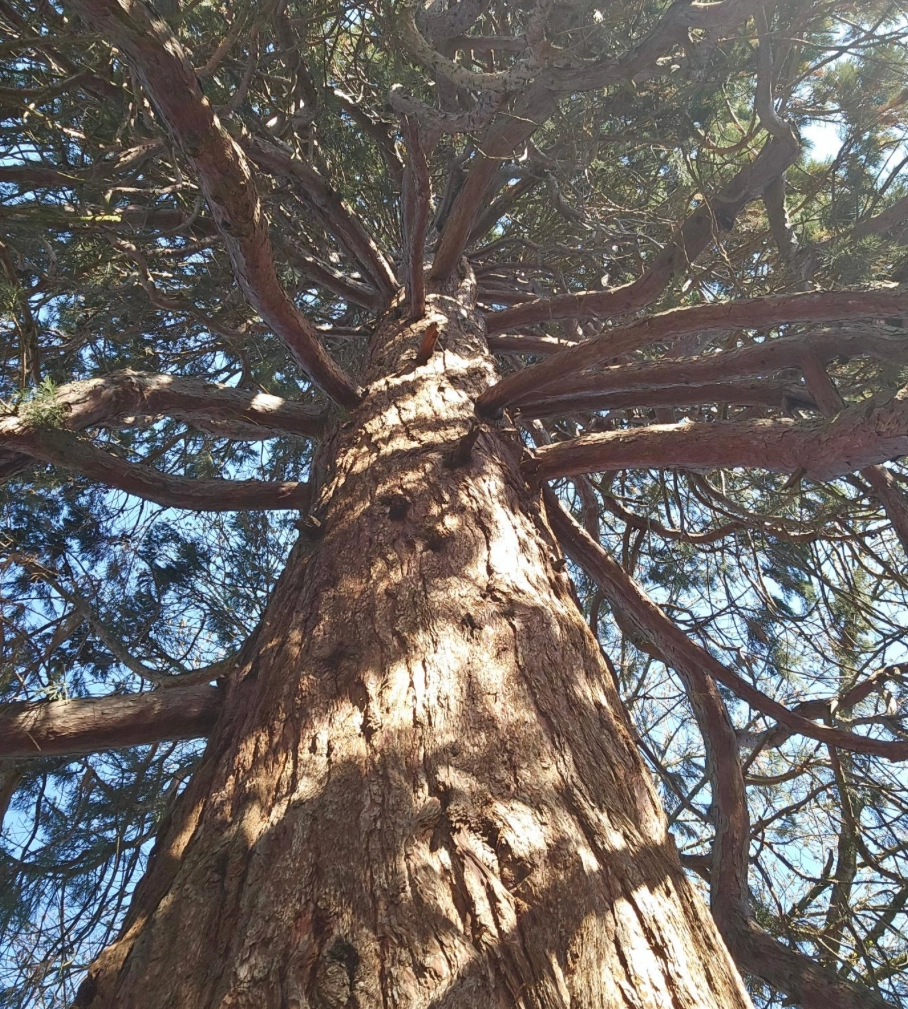
Northern California sequoia, 100-150 years old
02 · Community in practice
Tiny moments of
what community could be.
In a chat with Lui, I was sharing about my attempt at writing this newsletter, and she met me with such lovely, kind words that I immediately felt supported and even more excited to begin this. It almost felt like a tiny moment of what community culture could be.
What could new ways of helping each other look like? Amplifying, supporting each other. Listening and sharing.
Can we co-create a culture of mutual care? Of celebrating and supporting each other? Of curiosity? Of daring to dream forth regenerative communities?
And so I thought: Perhaps community is also built in these very small moments. Not only through big projects, shared land, governance structures, or ambitious visions, but through how we meet each other along the way.
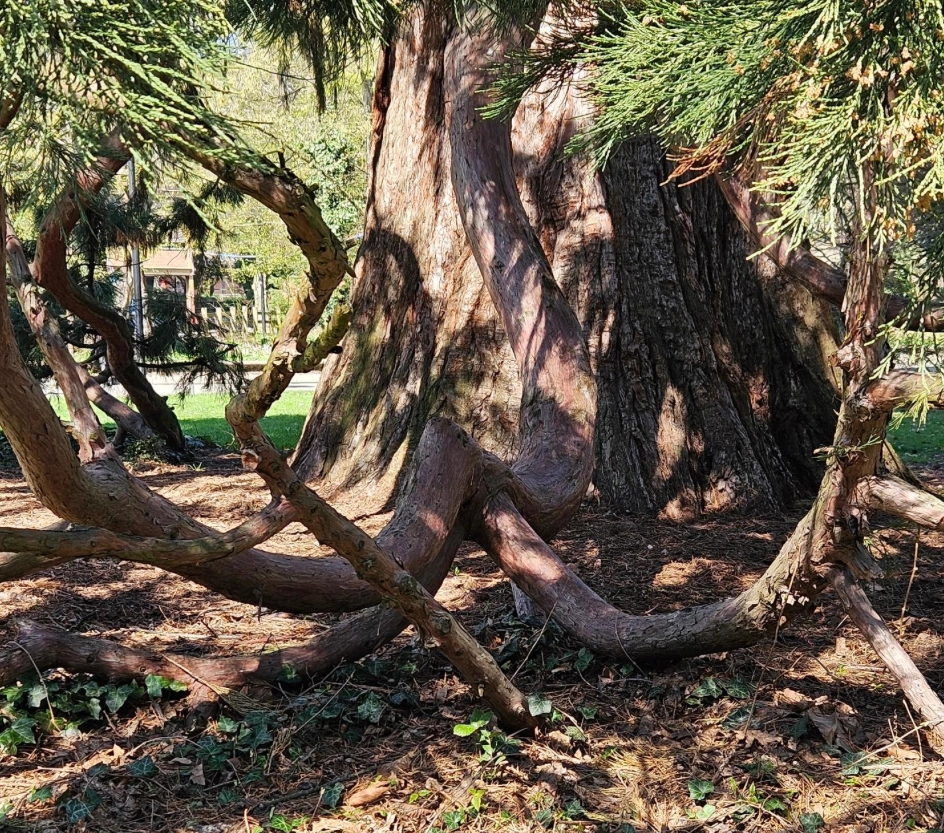
Northern California sequoia, 100-150 years old
Monumental trees
that remind us.
She also shared pictures of monumental trees with me, which I found fascinating. And in case you share this fascination, here is a beautiful website where you can find these trees. So I thought I’d share this here to bring a little more of the living world into these writings.
These trees have been growing in Geneva for many hundreds of years, and the way some people still care for them gives me a warm feeling.
A kind of hope that we can remember how to care for what is older than us. Hope that we can create cultures where care and connection are not an extra, but part of how we live. Cultures that again recognize the value and beauty in tending to the land, the other, the soil, the trees—through an authentically felt sense of connection, rather than simply because a book tells us we should. So we can potentially have more places where we can witness nature like this.
There is something humbling and mesmerizing about standing next to a tree that has been here for hundreds of years. It reminds me that our lives are not isolated moments, but part of something much larger, a web of symbiosis constructed by the forces of nature, whose intellect and creativity we are only now slowly beginning to unpack.
Ways to nourish
the soil.
- Follow us on Instagram, Mastodon, X, and LinkedIn.
- Share our YouTube videos with someone who might find them interesting or inspiring.
- Share this newsletter with friends, family, or someone you feel might resonate with what we are exploring.
- Talk about EcoHubs (or the principles and ideas that can be found here)—sometimes a conversation is all it takes for an idea to reach someone new.
- Apply to Join the community if you feel resonance and want to explore this more deeply and perhaps contribute something of your own.
Sometimes this nourishment can look like simply passing on something that moved you.
A thought. A conversation. An idea. A little piece of inspiration.
And perhaps, through these small acts, something grows.
EcoHubs community
A regenerative future · designed together
You are receiving this email because you are part of the EcoHubs community.
|