|
🌳 Sensitivity in the context of re-connecting
Hello ,
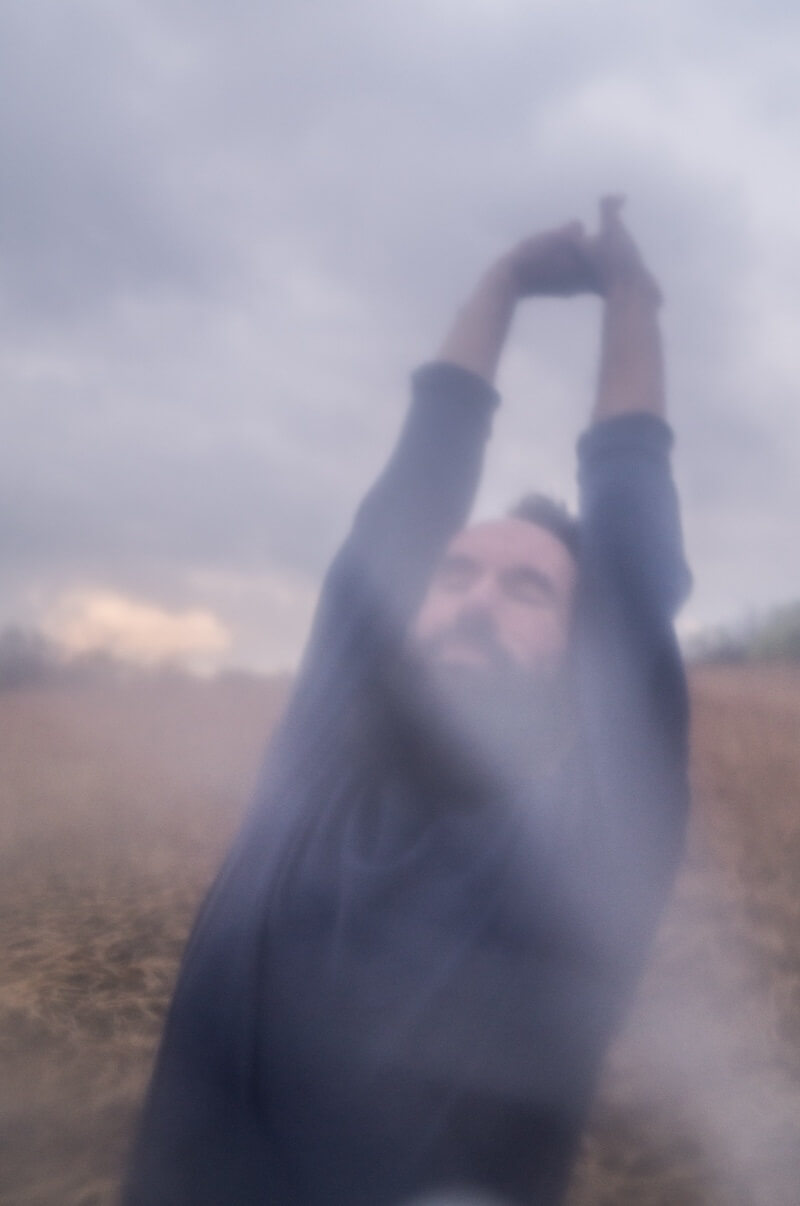
There is something I keep noticing when I spend time in nature, and maybe it is familiar to you as well.
The longer I stay, the more there seems to be to notice.
A sound I didn't hear before. A bug with an unusual shape and colour I had never witnessed before. A plant growing underneath another. The way water moves after rain. A small shift in the behaviour of birds. The different textures of the soil. The fact that what first looked like one green mass is actually hundreds of different lives, each doing something slightly different.
Perhaps “sensitivity” is simply the beginning of relationship.
The ability to notice that something is alive, and to let that knowing matter.
01 · A different kind of attention
What happens when
we become more sensitive?
I have been thinking about sensitivity again.
Not sensitivity in the sense of being fragile, or easily overwhelmed. And not as something that means we have to agree with everything we encounter.
More like the capacity to notice.
To notice when someone in a group becomes quiet. To notice when a conversation has shifted. To notice that we are tired before we become irritated. To notice what the land is telling us before we start trying to make it produce more.
Perhaps this is one of the things that gets lost when life becomes too fast.
We become good at responding, producing, solving, optimising. But much less good at simply perceiving.
And yet, so much of what we are trying to explore through EcoHubs seems to begin there.
How do we notice what a place needs?
How do we notice what a person needs?
How do we notice when something is out of balance?
And how do we stay sensitive enough to respond without immediately trying to control it?
I don't think there are simple answers to these questions.
But I increasingly suspect that the quality of the communities we create will depend, at least partly, on the quality of our attention.
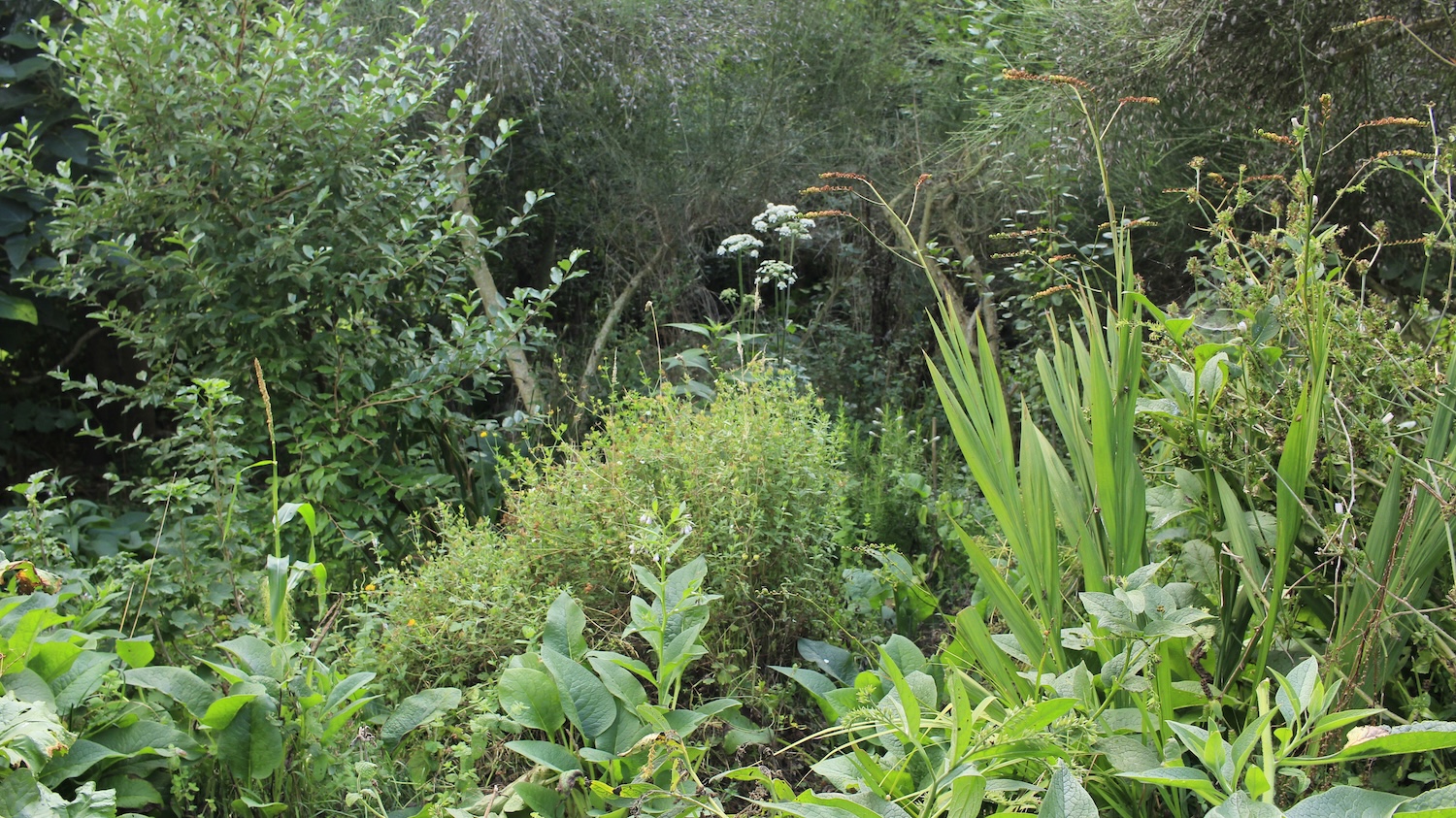
Inside the food forest: many layers, many lives, growing together.
We are not trying
to become the same.
One of the things I love about ecosystems is that they don't seem particularly interested in uniformity.
A forest does not need every tree to be the same height. A healthy soil does not need every organism to perform the same function. A meadow is beautiful precisely because so many different forms of life coexist within it.
And perhaps communities are not so different.
We sometimes talk about community as if the goal were to find the right people who all share the same values, worldviews, rhythms and visions.
And while that can certainly create an interesting compost heap, I wonder if there isn't some wisdom to harvest when we go through a different kind of process — one where we learn how to remain connected, even when we don't share all of these things.
To become sensitive to difference without immediately experiencing it as a threat.
To listen without having to agree. To be able to say "this is what I need" without turning that into "therefore you are wrong." To make space for someone else's way of being without abandoning our own.
I think this is part of why community is so interesting to me. It is not only about creating a beautiful shared vision. It is a place where we get to practise being human with other humans — with all the friction, beauty, tenderness and unpredictability that comes with it.
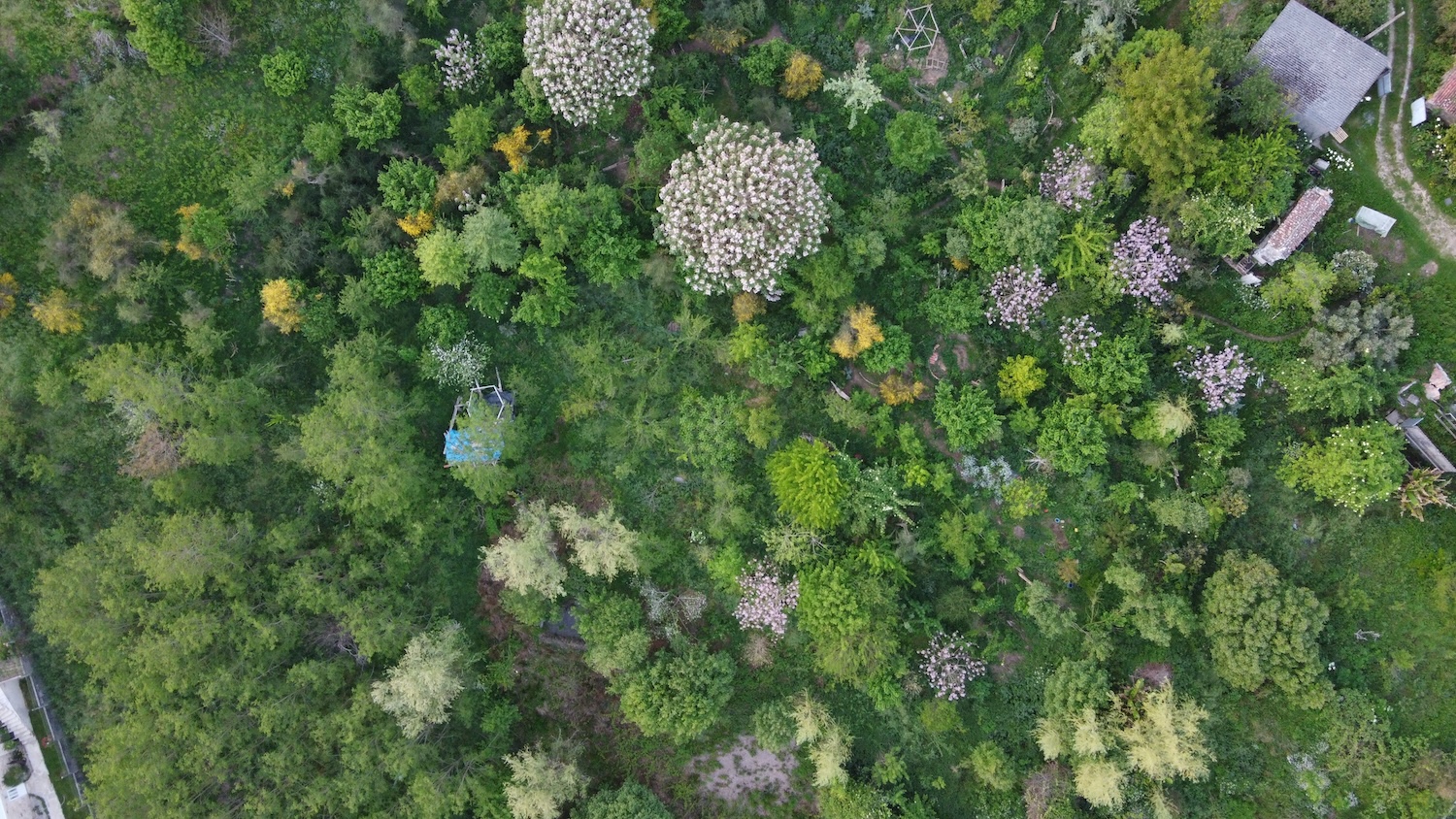
A drone's-eye view of years of patient tending.
A forest garden
full of life.
A friend of mine, Bosque, and his brother Diego have been creating something beautifully wild and unique in Spain.
To simply refer to it as a “forest garden” doesn't bring forth the enchantment and beauty of what it is: an ecosystem, a being, a living place. One they have tended for so long — almost 15 years now, I believe.
It produces not only food. It is diversity, wisdom, connection, wildness, surprises, uncertainty, nourishment, and unexpected teachings that come from being in relationship with Mother Nature herself, and with whatever emerges from the living landscape.
Different plants occupying different layers. Different rhythms. Different relationships. Things growing together rather than being forced into one uniform system.
There is something deeply humbling about seeing what so many years of patient attention can become.
It makes me think about food, but also about community.
What if nourishment does not come primarily from extracting as much as possible from a place?
What if it comes from learning the relationships well enough that the whole system becomes more alive?
A food forest can be a place where nourishment emerges from relationship.
And perhaps that is one of the things we are trying to understand with EcoHubs too.
Not how to design the perfect community, but how to create the conditions in which many different lives can coexist, support one another, and become more abundant together.
Maybe regeneration
starts with attention.
The word regeneration can sound very big.
We use it to talk about land, economies, communities, cultures and entire ways of living.
But sometimes I wonder if it starts somewhere much smaller.
With becoming sensitive enough to notice what is actually happening.
To notice that the soil is tired.
That a person in the room has gone quiet.
That we are taking more than we are giving.
That something we thought was working is actually creating another problem somewhere else.
And then, perhaps, to care enough about what we notice that we allow ourselves to change.
This is not always comfortable.
Sensitivity can make us feel more, not less. It can make contradictions harder to ignore. It can make us aware of how far our current lives are from what we intuitively know is possible.
But maybe that is not a problem to solve. Maybe it is part of waking up.
I don't know exactly what EcoHubs will become.
But I increasingly feel that part of the journey is learning to pay better attention — to ourselves, to each other, and to the living world we are embedded in.
And then letting that attention shape what we build.
A few things
you can do.
-
Watch the forest garden video above, and let yourself simply be curious about what years of attention can create.
-
Follow EcoHubs on Instagram, Mastodon, X, and LinkedIn.
-
Share this newsletter with someone who might be exploring similar questions around community, nature and how we want to live.
-
Notice something. A tree, a garden, a conversation, a relationship, a place that needs care. Stay with it for a little longer than you normally would.
-
Come closer to EcoHubs if this way of thinking resonates with you. You can join the community and explore what we are building together.
Maybe this is what I am most interested in right now.
Not having all the answers.
Just becoming a little more sensitive to what is alive — and seeing what becomes possible when we start building from there.
|